
Should you replace your roof before installing solar? What to check before you spend
By the SolarCoverUK team
You do not automatically need a new roof to install solar panels. A sound roof may be suitable after an assessment, and a local repair may be enough where there is a specific defect. If the roof is approaching the end of its useful life, however, it makes sense to consider the roofing and solar work together before committing to either.
The useful question is not simply “How old is my roof?” It is “What condition is the whole roof in, what work is likely to be needed, and how will fitting solar affect that work?”
Start with evidence about your roof
Ask for a written roof-condition assessment before agreeing the installation. It should explain what was inspected, what could not be seen and the reasons for recommending repairs, replacement or no roofing work.
The National Federation of Roofing Contractors’ homeowner guide recommends a condition report from a competent person before solar, considering the complete roofing system rather than the covering alone. Necessary repairs or reroofing should be addressed before installation.
Bring any information you already have: previous roof invoices, leak repairs, guarantees and photographs of changes you have noticed. These help frame the assessment; they do not replace it. You should not need to climb onto the roof to prepare for a conversation.
Age provides background, but ask anyone recommending replacement to show you the evidence. Equally, ask anyone saying the roof is fine how they reached that conclusion.
Keep, repair or replace: three different decisions
Keep the existing roof: Where the assessment supports it, solar on the existing covering deserves consideration. Ask what routine roof maintenance would involve with the proposed array in place.
Repair first: Where a specific problem can be resolved without renewing the whole roof, ask for a repair option. The quotation should explain which defect it addresses and whether other concerns remain.
Replace before or alongside solar: Where the assessment identifies widespread deterioration or insufficient remaining service life, compare a coordinated reroof-and-solar project with doing the work separately.
These are decision routes, not a diagnosis of your home. In its March 2026 discussion of solar on end-of-life roofs, NFRC highlights the disruption that can follow inadequate assessment, including restricted repair access and having to remove and reinstate panels. That is a reason to inspect carefully, not a reason to replace every older roof.
What should the assessment cover?
Ask the contractor to explain the condition of the covering, relevant roof junctions and the structure supporting the proposed installation. Where some parts are inaccessible, ask whether further investigation is needed before a firm recommendation can be made.
A structural check and a roof-condition check answer different questions. A roof may be capable of supporting an array while still needing weatherproofing repairs. Conversely, a roof that looks tidy is not proof that the proposed loads have been assessed.
MCS’s MIS 3002:2025 installation standard, sections 3.1.2 and 3.9, requires appropriate building assessment and checks of the roof structure for the proposed loads. It also addresses maintaining weather-tightness and consulting a structural engineer where the structure is unusual or there is doubt. Ask who is responsible for each part of that assessment.
If you need a new roof, compare the complete options
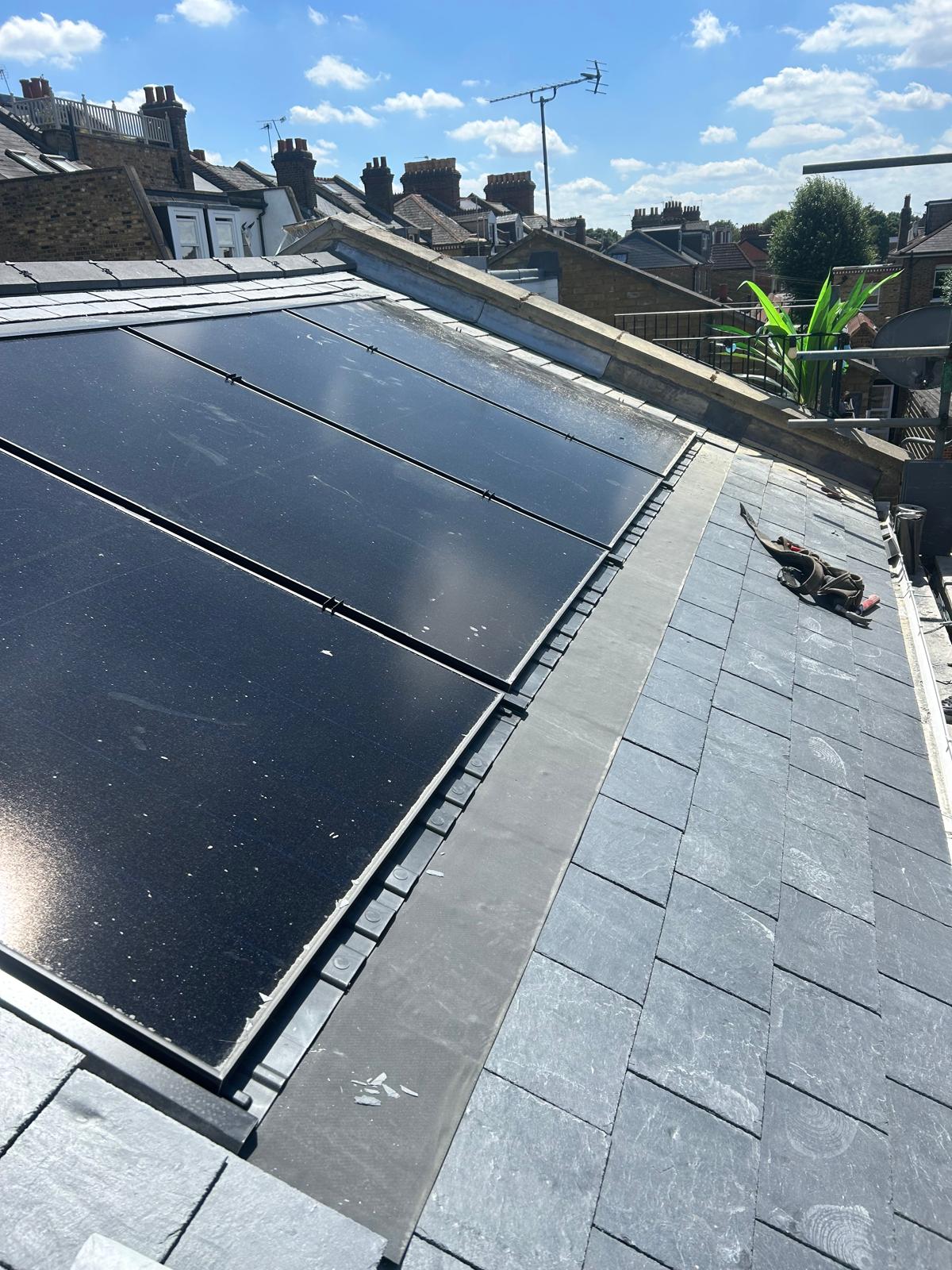
Replacing a roof creates an opportunity to compare panels mounted above the covering with a system integrated into it. The appropriate choice depends on the roof and the specified system, as well as appearance and budget. Integration does not remove the need for structural assessment or careful detailing.
Ask for a drawing showing how the solar area meets the surrounding roof, rather than choosing from a panel photograph alone. Our project photographs show different approaches, including panels integrated into a new slate covering and mounting trays photographed during installation. They illustrate the finish and construction stages; they are not a specification for another property.
Compare the whole installed scope. A lower equipment price does not tell you whether roofing, access, electrical work and finishing details are included. Nor should the most expensive finish be treated as the default.
Could doing both jobs together avoid repeat costs?
Possibly. Energy Saving Trust notes that existing scaffolding for roof repairs can reduce solar installation costs. That depends on whether the access arrangement and programme actually suit both jobs.
Ask for the comparison in writing: roofing now and solar later, versus a coordinated project. Check scaffolding duration, any adaptations, waste removal and responsibility for keeping the building weatherproof during the works. There is no reliable universal saving to promise without pricing your property and scope.
If the combined project is beyond your budget, ask which roofing work is essential now and what preparation for future solar would be useful. Solar should be a considered purchase, not pressure to spend money you need elsewhere.
Include insulation, permissions and existing guarantees
If roofing work is planned, discuss insulation and ventilation at the same time. Energy Saving Trust explains that insulation changes how heat and moisture behave, and advises resolving damp problems and considering ventilation in its roof and loft insulation guide. Ask which approach suits the construction of your home.
For projects in England, GOV.UK’s building-regulations guidance identifies roof-covering replacement as work that may require approval. Building regulations and planning permission are separate matters. Ask who will establish the requirements and provide the relevant completion paperwork. Requirements vary by jurisdiction; do not apply an England-specific answer automatically to Wales, Scotland, Northern Ireland or the Channel Islands.
If an existing roof guarantee is in place, check the effect of the proposed solar work before installation. The MCS standard linked above specifically addresses consulting the roof warranty provider. Keep the written response with your project documents.
Six questions to ask before accepting a quotation
- What evidence supports keeping, repairing or replacing my roof?
- What has not yet been inspected, and could that change the price or design?
- Which roofing, access, solar and electrical items are included or excluded?
- Is there a simpler option that meets my priorities?
- Who takes responsibility for roof details, approvals, handover and subsequent enquiries?
- What would roof maintenance or a future panel removal involve?
Keep the answers alongside the quotation. A useful proposal should make the choices easier to understand, including the reasons for leaving work out.
Want help deciding where to start? Email Matthew at contact@solarcoveruk.com with your postcode, roof type and what you are considering. We can discuss the next useful step and whether photographs, plans or a survey are needed.